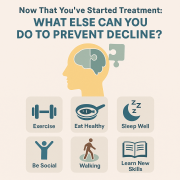
Now That You Started Treatment, What Else Can You Do to Prevent Decline?

Empowering Steps Beyond Treatment: Safeguarding Against Decline

What starts with a commitment to the medical treatment of hearing loss and tinnitus leads to a promise to take best care of yourself by following a holistic and comprehensive treatment plan. Our simple motto that hearing care is health care means it is important that we think beyond the ears and assure you live your best, healthiest, life. We remain steadfastly committed to helping each patient understand how (in addition to treating their hearing loss) they can actively age, remain confident and stay fiercely independent.

Like treating all major medical conditions, the initial prescription (be it a pill to reduce your cholesterol, a round of radiation, an injection to control A1C levels, etc.) must be combined with a healthy lifestyle. The body has an incredible ability to provide relief and heal itself—but only when given the right resources.

We commit to a holistic approach to treating sound, mind, and body. We not only help you hear your best, but we can also help you live your best life as you age and prevent decline. From the technology we use to help you hear your best every day and keep you mentally sharp, we can also help you to increase overall health by discussing diet, supplements, and exercise.

What you hear matters.

Your brain is always on. Your ears are always on too. This means your brain is constantly stimulated by the vast neural network from your ears. Until it is not. Then what happens?

There is a general belief that activities which stimulate the mind, i.e., hearing, can help to slow cognitive decline. Data tells us that treating hearing loss may even slow the progression of dementia.

What starts out as subtle cognitive changes that are seemingly associated with aging goes on to affect an older adult’s day- to-day function. As we age, there are certain expected cognitive declines that we will all experience. However, with increased risk of cognitive decline and dementia associated with hearing loss, it is important to know the differences of ‘normal aging’, MCI (mild cognitive impairment) and dementia.

Early stages of significant cognitive decline (first seen in MCI) include problems with memory, language, thinking, judgement, and visual perception. Fortunately, most people are still ‘with it’ enough to notice these issues and can seek early intervention. Family and close friends may also notice a change. But these changes often are not severe enough to significantly interfere with daily life.

Common signs and symptoms of cognitive decline include:

  • Memory loss such as forgetting names, places, or recent events.
  • Problems with organizing or planning—struggling with multitasking.
  • Difficulty with recognizing faces.
  • Difficulty finding words—often losing vocabulary.
  • Misplacing items.
  • Problems calculating a tip or paying bills.
  • Slower recall which could either be visual or verbal.

MCI along with hearing loss can increase your risk of later developing dementia caused by Alzheimer’s or other neurological conditions, which is why addressing risk factors early such as the medical treatment of hearing loss is critical to preventing dementia.

The proper medical treatment of hearing loss and tinnitus is designed to provide auditory feedback and cognitive stimulation that your brain needs.

What you feed your body matters.

Much like an expensive car, your brain functions best when it gets only premium fuel. Eating high-quality foods that contain lots of vitamins, minerals, and antioxidants nourishes the brain and protects it from oxidative stress—the “waste” (free radicals) produced when the body uses oxygen—which can damage cells.

Diet

Unfortunately, just like an expensive car, your brain can be damaged if you ingest anything other than premium fuel. If substances from “low premium” fuel (such as what you get from processed or refined foods) get to the brain, it has little ability to get rid of them. Diets high in refined sugars, for example, are harmful to the brain. In addition to worsening your body’s regulation of insulin, they also promote inflammation and oxidative stress. Multiple studies have found a correlation between a diet high in refined sugars and impaired brain function.

Just as there is no magic pill to prevent cognitive decline, no single almighty brain food or supplement can ensure a sharp brain as you age. Nutritionists emphasize that the most important strategy is to follow a healthy dietary pattern that includes a lot of fruits, vegetables, legumes, and whole grains.

With that said, certain foods in this overall scheme are particularly rich in healthful components like omega-3 fatty acids, B vitamins, and antioxidants, which are known to support brain health and often referred to as ‘brain foods’. Incorporating many of these foods into a healthy diet on a regular basis can improve the health of your brain, which could translate into better mental function.

Research shows that the best brain foods are the same ones that protect your heart and blood vessels, including the following:

  • Green, leafy vegetables. Leafy greens such as kale, spinach, collards, and broccoli are rich in brain-healthy nutrients like vitamin K, lutein, folate, and beta carotene. Research suggests these plant-based foods may help slow cognitive decline.
  • Fatty fish. Fatty fish are abundant sources of omega-3 fatty acids, healthy unsaturated fats that have been linked to lower blood levels of beta-amyloid—the protein that forms damaging clumps in the brains of people with Alzheimer’s disease. Eating fish 1-2 times a week can be healthy for your brain (but be sure to choose varieties that are low in mercury, such as salmon, cod, canned light tuna, and pollack). If you are not a fan of fish, ask your doctor about taking an omega-3 supplement, or choose terrestrial omega-3 sources such as flaxseeds, avocados, and walnuts.
  • Berries. Flavonoids, the natural plant pigments that give berries their brilliant hues, also help improve memory, research shows. In a 2012 study published in Annals of Neurology, researchers at Harvard’s Brigham and Women’s Hospital found that women who consumed two or more servings of strawberries and blueberries each week delayed memory decline by up to two-and-a-half years.
  • Tea and coffee. The caffeine in your morning cup of coffee or tea might offer more than just a short-term boost! In a 2014 study published in The Journal of Nutrition, participants with higher caffeine consumption scored better on tests of mental function. Caffeine might also help solidify new memories, according to further research. Investigators at Johns Hopkins University asked participants to study a series of images and then take either a placebo or a 200-milligram caffeine tablet. More members of the caffeine group were able to correctly identify the images on the following day.
  • Walnuts. Nuts are excellent sources of protein and healthy fats, and one type of nut might also improve memory. A 2015 study from UCLA linked higher walnut consumption to improved cognitive test scores. Walnuts are high in a type of omega-3 fatty acid called alpha-linolenic acid (ALA), which helps lower blood pressure and protects arteries. That’s good for both the heart and brain.

In considering that poor diet is now the leading killer globally and mental disorders account for the largest burden of global disability, the fact that diet appears to play a role in mental as well as physical health (as well as increasing the risk of dementia) must be taken very seriously.

Supplements

Yes, proper diet is critical. However, there are a variety of supplemental nutritional needs that are difficult to come by (even with a great diet) that our brains require as we age to help maintain sharp mental acuity and positive cognitive function. Natural supplements can combat certain health, lifestyle, and environmental factors that can increase the risk of cognitive decline and dementia, including:

  • Inflammation
  • Poor Diet
  • Insulin Resistance
  • Lack of Exercise
  • Poor Sleep
  • High Blood Pressure
  • Toxins
  • Stress
  • Social Isolation

Below is a short list of some of the most effective supplements available today that support healthy cognitive function as we age.

CoQ10 (Coenzyme Q10)

This naturally occurring antioxidant that reduces the proliferation of free radicals is produced in the human body for cellular growth and maintenance. Unfortunately, levels of CoQ10 decrease as we age. CoQ10 supports nerve health, the protection of brain tissue from oxidative damage and reduces the action of harmful compounds that can lead to brain disease. In addition, CoQ10 supports healthy cardiovascular function and may reduce the risk for repeat heart attacks and helps combat side effects of cholesterol-lowering statins.

Ginkgo Biloba

This naturally occurring ingredient derived from a tree in Asia can support a healthy inflammation response, supports the production of important brain-building factors, supports recovery from heavy metal/mold exposure, supports healthy blood flow, and supports the brain’s repair from physical trauma.

Phosphatidylserine

This is hard to say but the simple ingredients support a healthy blood sugar response, provide important building factors, and support the brain’s recovery from trauma. The 80+ million Americans living with diabetes or pre-diabetes are at particular risk of cognitive decline given the inability of the body to effectively manage glucose levels.

Coffee Fruit Extract

Derived from the same plant as the coffee bean (although often discarded in favor of the coffee bean!) helps support healthy blood sugar response and increases the brain’s production of key building factors like brain-derived neurotrophic factor (BDNF) that build proteins found in the brain.

Yamada Bee Propolis

Extracted by bees and combined with specific plant proteins to help protect themselves, this supplement supports healthy inflammation response, supports healthy blood sugar levels, supports the production of brain-building factors, supports recovery from exposure to heavy metal and mold exposure, supports normal blood flow, and supports brain repair from trauma.

Turmeric

Many Americans have this tasty spice in their kitchen cabinets, but it is too often left unused! Curcumin, a substance found in Turmeric helps support healthy inflammatory response, provides brain-building compounds, and supports recovery from heavy metal and mold exposure.

Gotu Kola

This herbal extract (from the parsley family) is commonly found in traditional Chinese medicine. This derivative has been used for thousands of years and helps support a healthy inflammatory response, healthy blood flow, and supports brain repair from trauma.

Don’t forget, what you do with your body matters too!

Have you heard that ‘sitting is the new smoking’? When we sit around and let our brains wonder ‘what will be the cause of our demise’, most of us think about heart disease, diabetes, cancer, dementia, old-age, pneumonia, disease, etc. But, according to new data the chair you sit in most is one of the biggest threats to your health. No, this doesn’t mean you should immediately go and throw out your favorite chair, rather it’s time to consider having ‘the talk’ with your favorite chair and let it know you need to get out and stretch your legs more!

Rather than try and come up with our own novel scary statement about how we need to get up from our chairs and be more active, we believe Dr. James Levine, a professor of medicine at the Mayo Clinic has said it best:

“Sitting is more dangerous than smoking, kills more people than HIV, and is more treacherous than parachuting. We are sitting ourselves to death…. the chair is out to kill us.”

—Dr. James Levine, Mayo Clinic

To put it in to perspective—we were not designed to sit. Think about it—we are bipedal for a reason and sitting isn’t the reason. The body is meant to stay in perpetual motion until rest is required. Humans have been on the planet way longer than the chair was invented.

If right about now you are thinking ‘but I exercise, so this can’t apply to me’, unfortunately that doesn’t hold true. Yes, exercise is good for you, and we all need to do more of it; but it doesn’t negate the damage we do to our bodies by sitting for extended periods of time, day after day. Thus, it stands to reason that more exercise is not the answer to sitting too much. Sadly, 10 hours of stillness in a chair (which is not uncommon for people at work) cannot be offset by 1 hour of exercise.

Sitting for long periods of time changes you. It changes your metabolism. It changes the way your body behaves and stores nutrients. In fact, your metabolism can slow down by as much as 90% after only 30 minutes of sitting.

Sitting too long increases the risk of nearly everything that can kill you, including increased rates of:

  • Type-2 Diabetes
  • cardiovascular disease
  • obesity
  • disturbed sleep

And increased risk of:

  • back and neck pain
  • cancer
  • deep vein thrombosis
  • anxiety and depression
  • Alzheimer’s and dementia
  • premature death

So, what is the best way to combat ‘sitting too much’. While this is particularly hard for those who work at a desk, it can also be a challenge for many people living with the social isolation that accompanies hearing loss. For starters, get in the habit of standing and/or walking at least once every 20 minutes. With the advent of computers that fit on our wrist, we can now set up simple re minders that get us to ‘stand’. We particularly like smart watches that will not stop reminding you until you stand up!

The goal is to gradually extend our periods of standing and increase the frequency of taking short walks. This is not about engaging in a newfound cross-fit exercise program, but rather increasing the frequency (not the intensity) of physical movement. There are many things we can do every day to increase our standing-to-sitting ratio. When you are at home or work, here are some simple things you can do each day to change your sit ting habit:

  • Drink a lot of water (while good for you, this also has the advantage of making you walk to the bathroom more often).
  • Talk and walk (when reaching out to a friend or col league on the phone, take the call ‘to-go’ and walk around).
  • Pay your bills standing up (instead of sitting at your desk to pay your bills- stand at the counter-height island and pay your bills!).
  • Meet up for a coffee and a walk (next time you meet somebody for a coffee why not walk and talk rather than sit down).
  • Park further from the entrance to wherever you are going (i.e., take the furthest available spot at the supermarket).
  • Take the stairs (now that you drink lots of water, try and use the bathroom furthest away in your house, preferably up or downstairs!).

In addition to the extra movement that you will have from sitting less, a little bit of exercise truly goes a long way. A simple regular exercise regimen can increase your metabolism, help you keep cancer, diabetes, heart disease and obesity at bay, and keep you socially active (i.e., the opposite of social isolation!). If you do not know what pickleball is—it is the fastest growing sport in our country for those over 50 years young. Although we have unofficially nicknamed the game ‘tiny tennis’, it provides BIG benefits by increasing heart rate, burning calories, requiring hand-eye coordination, boosting your balance, and we guarantee you will smile when you play (which is a great workout for your face muscles!).

Always take the opportunity to talk to your hearing healthcare provider and primary care physician about a holistic approach to living your best life.
Take the next step:

Aging is inevitable. Decline is optional. What do you choose?

Frequently Asked Questions

Below is a handy-dandy resource section for you and your loved ones to help guide you through some of the most Frequently Asked Questions (FAQs).

Is it really such a big deal if I do not treat my hearing loss?

Unfortunately, yes. Untreated hearing loss is linked to life-threatening medical conditions including mental decline, dementia, falls, hospitalizations, and even premature death. The time to act is now as hearing loss cannot be ‘managed’ by just making people speak louder!

Who are some familiar faces that have treated their hearing loss?

To name a few… Whoopi Goldberg, Stephen Colbert, President Ronald Reagan, William Shatner, Jody Foster, Halle Berry, Peter Townsend, President Bill Clinton, and Huey Lewis.

Will I be able to afford treatment?

Yes. Membership programs are more affordable than your cable and cell phone bills. Most patients can also take advantage of their insurance benefits and Health Savings Accounts to make their payments lower than the cost of coffee per day.

It is a great day when you can tell a patient that a treatment decision doesn’t have to be a financial decision!

Is treating my hearing loss and tinnitus painful?

No. Modern treatment technology and testing procedures are painless. In fact, most of today’s technology is completely invisible and so lightweight.

How much work / family time will I miss because of treatment?

Not much. After the initial visits, most appointments are anywhere from fifteen to forty-five minutes.

I am a snowbird and want to know what happens to me when I am not at home for several months per year?

If you are lucky enough to have that home-away-from-home, then we suggest you enjoy it to its fullest! We will provide you with all the technology supplies and needs before you go away, and we are never more than a phone call away. If needed, we can even do a telehealth ‘zoom conference call’ and talk you through any troubles. We guarantee—treating your hearing loss will make your life better and never be a burden or stress.

What are some of the warning signs that I might have some signs of early-stage hearing loss?

The four most common signs of hearing loss are:

  1. Difficulty following a conversation when there is background noise (i.e., at a restaurant).
  2. Tinnitus (ringing/buzzing sounds in your ears and/or head).
  3. Your family is telling you that you need help!
  4. More ‘senior moments’ than you would like to admit!

What are some of the “side effects” of untreated tinnitus?

Tinnitus can have a profound impact on a person’s ability to hear, concentrate, sleep and emotional state of mind. Most often, tinnitus is caused by hearing loss and should be thought of as your internal alarm telling you that something is wrong and requires your attention asap!

What makes a hearing healthcare specialist (Audiol ogist or Board-Certified Hearing Instrument Specialist), more qualified than a PCP or an ENT?

Hearing healthcare providers specialize in the medical treatment of hearing loss and tinnitus. Whereas your PCP is your ‘general health contractor’ that oversees all your healthcare needs, and the ENT specializes in swallowing and speech, breathing and sleep issues, surgical intervention of hearing loss, allergies and sinuses, head and neck cancer, skin disorders, and facial plastic surgery.

Why should I choose a specialist to treat my hearing loss?

Unique treatment requirements and otherwise difficult auditory problems are common everyday scenarios for your hearing healthcare provider. In the interest of receiving the most efficient and effective treatment possible, choose a hearing healthcare specialist.

How do I know if my provider is an Audiologist or Hearing Instrument Specialist?

Only healthcare providers can belong to the Excellence In Audiology™ network of providers. Most Audiologist and Hearing Instrument Specialist are also accredited by the American Academy of Audiology (AAA), American Speech-Language-Hearing Association (ASHA) and/or the International Hearing Society (HIS).

What is a treatment coordinator?

During your initial consultation(s), you will be assigned a patient contact person—we call this person a “treatment coordinator”- with whom to schedule appointments, confer with scheduling and, of course, answer all questions you may have.

Why are follow-up visits important?

These are wonderful opportunities for your provider to ‘fine-tune’ your cognitive stimulation and maximize your treatment and for you to get further details or answers to any lingering questions you may have.

Why is early treatment so important?

To put it simply: A Mild Hearing Loss is a Major Problem! Although we recommend that everybody over the age of 50 years young have regular hearing evaluations, you are never too young to treat your hearing loss at the first signs. Unfortunately, even a Stage 1 hearing loss (sometimes referred to as a ‘mild hearing loss’) can increase your risk of mental decline and dementia by as much as 200%! Like every medical condition, it is important to ‘catch it early and treat it early!’.

Is there such a thing as being ‘too old’ to start treatment?

No. Although many patients try to reason their way out of treatment by saying ‘what’s the point, I only have a few years to live’ the benefits of treatment, whether they be for 6 months or 6 years, positively impact your overall social, emotional, physical, and cognitive health and may help you live longer!

What if I do not believe in treating my hearing loss (after all, my parents never did)?

Well, you’re entitled to your opinion, but this is like saying you do not believe the earth is round (our apologies if we just offended any ‘flat earthers’). You can hide from it, pretend it is not there, refuse to acknowledge it or believe that you can ‘manage’ without medical intervention, but the simple fact remains—if you are not aware of the potential risks, you are likely to suffer from them.

What is tinnitus?

When the ear breaks down from age, noise exposure, medications, viruses, genetics, etc., the nerves that travel from ear-to-brain break down. This results in a ‘surge’ of neural activity (referred to as Central Gain) that is perceived as sound. Nearly 90% of people with tinnitus have hearing loss (and vice versa).

Where should I start to look for treatment if I am concerned about my hearing loss (or for a loved one)?

If you suspect that you have hearing loss (or have been told by somebody to get your ears checked), go to the website www.salushearing.com to find a local hearing healthcare provider that you can trust subscribes to best practices. Please, stay away from anybody who partakes in sleezy sales tactics.

Why should I address tinnitus?

Tinnitus is most often one of the first signs of hearing loss. Because hearing loss is gradual (for most patients) they often notice the ringing in their ears before noticing a change in hearing. This ‘alarm’ inside your head is telling you that something is wrong, and it needs to be medically addressed ASAP.

What is treatment technology?

The way we treat hearing loss today is different (way better!) then even a few years ago. While traditional hearing aids were good at making sounds louder—they made EVERY sound louder—even the ones that were harmful and annoying! Today’s technology is specifically designed to address the cognitive aspects of hearing loss, tinnitus and associated cognitive deficiencies. When treatment is done right, you will hear as naturally as possible.

What are the primary benefits of treatment?

To summarize, the five medical benefits of treatment include:

  • Increase in quality of life and relationships at home and with friends.
  • Reduced experience of tinnitus.
  • Decreased risk of falling (the #1 cause of injury-related death in older adults).
  • increased mental acuity.
  • Reduced risk of mental decline and dementia.

How do I get started with treatment?

It is simple: just make an appointment with your local hearing healthcare provider (which you can find on the website www.salushearing.com) for an initial consultation. Most practices will offer a free initial consultation to see if you are a good candidate for their treatment program.

How will treatment impact my brain?

New treatment technology has been found to effectively increase memory recall, processing speed and selective attention. The increased brain activity from treatment may also eliminate your increased risk of falling and losing your independence at home.

Is medical treatment of hearing loss and tinnitus appropriate if I am in my 30’s or 40’s?

Yes, especially because we now know that the early treatment of hearing loss is the #1 modifiable lifestyle factor to reduce your risk of developing cognitive decline and dementia.

Why are traditional hearing aids still sold?

Frankly, we have no idea! If it were up to us, we would ban the sale of all traditional hearing aids. We believe that as medical professionals we are ethically bound to only provide the best treatment available and never compromise on patient care.

Is so-called “invisible technology” effective?

Yes. As the technology we use to treat hearing loss continues to advance, the ‘packaging’ this technology comes in has become smaller and nearly invisible. While providing the right treatment is the priority, we can make your technology as discrete and invisible as possible. Long gone are the ‘beige bananas’ on people’s ears!

What are some of my payment options in addition to insurance?

Our core value is to treat every patient. To do this, we have met the challenge of making treatment affordable for all. Gone are the days of patients and families paying thousands of dollars up front (in fact, if you are ever told that you must pay in full—we suggest you politely excuse yourself from the appointment and run far, far away!). With membership programs that are compatible with insurance benefits and Health Savings Accounts (HSA’s), we can help patients afford medical treatment for a few dollars per day.

What if I have a “hearing emergency” before or after office hours?

If you are experiencing a hearing emergency that cannot wait for regular office hours, most practices have a special number to call before, during or after business hours. If this information is not given to you readily, ask how your hearing healthcare practice handles office emergencies. We know that ‘stuff happens’ and that it doesn’t always happen 9-5 pm Monday through Friday, which is why we are always available to our patients.

Do I have to worry about moisture or sweat hurting my hearing technology?

While full submersion of any computerized technology is never encouraged, today’s hearing technology is both moisture and dust resistant and can stand up to a beating!

Can I wear a mask while I wear my hearing technology?

A lot has changed in recent years and now that masks have become ‘normal’ today, you need not worry that they interfere with treating your hearing loss. Because most patients feel that treating their hearing loss is a ‘natural’ process and something they don’t actively think about, we remind patients to be careful when wearing anything on their ears that can accidentally cause your technology to fall off and get lost. (Most new technology has a ‘GPS homing beacon’ built into it and you can use your phone to find any lost technology!).

In addition to treating my hearing loss, what else can I do to keep my mind and body healthy?

Treating hearing loss is one of many things that older adults can do to look and feel their best. A proper diet with brain healthy foods and supplements is a vital component to maintaining mental acuity and sharpness as we age. Talk to your hearing healthcare provider about ‘what else’ can be done to actively age.

Take the next step:

How to Get More Information

Unlocking the Secrets: A Guide to Accessing Abundant Information

There are several ways to get information about a hearing healthcare practice. First, we want to address the ways we do not recommend.

We do not recommend Yelp. Yelp is, unfortunately, not at all what it seems and is frequently the subject of lawsuits from business owners and under regulatory scrutiny centered around the poorly policed manipulation of reviews and even flooding of fake reviews by “bots” no less! Some companies can use Yelp as competitive warfare while other companies turn around and sell the business owner under negative-review-assault “reputation management services.” So, beware! Get the information you need from truly trusted sources.

Google is a great starting point and a valuable place to check out patient reviews and rankings. It takes effort to put together one’s thoughts and go online and leave a review. Before starting treatment, always check out the quantity and quality of reviews for hearing healthcare practices in your community.

First, the best thing to do is make certain you get all your questions answered by the hearing healthcare specialist and the practice’s treatment coordinator. Do not hold back. Put them on the spot. Be assertive. Do not feel you have to be deferential to the guy in the white coat (which is part of the reason we do not wear white coats, ever!). Our goal in this is to have every patient and every family member fully knowledgeable about every aspect of the treatment so that they have zero anxiety.

If you have a quick follow-up visit scheduled, these are wonderful opportunities to either ask questions you may have missed the first time or get further details from your provider directly. You will always leave our offices with the treatment coordinator’s name, email, and phone number. Now that you know where to get your most burning audiology questions answered, here are some simple tips we have amassed over the years to help you easily and effectively get the information you need:

How To Get Your Questions Answered

  • Make a List. The easiest way to get what you want is to know it in advance. Make a list of the various questions you have when they arise so you can quickly and easily go down the list to assure you have got the right answers for the right questions.
  • Bring it With You. Take the list with you when you go for your audiology visit. That way you have the questions at hand, at the right place, at the right time. If you are calling in to get answers, you can also have the list ready and tick off one question for every answer you receive.
  • Record the Answers. If your hearing healthcare specialist, or their receptionist, speaks too fast or you cannot keep up while writing the answers down, why not record them (or at least ask them to slow down)? Your cell phone likely has a “record” feature and, if not, there are many affordable micro-recorders on the market today.
  • Double Check. Finally, make sure you have the right answer by double checking with your practitioner or their receptionist or assistant.

Knowing where to find the information you need is only half the battle; follow these tips and you will know how to get what you are looking for as well.

Regardless of how many questions you have, or your comfort level with technology, phone calls or in-person visits, your hearing healthcare specialist should offer an option that fits your schedule and makes all your unresolved issues crystal clear.

Take the next step:

Shouldn’t My Treatment Be Guaranteed?

Ensuring Reliable Care: The Quest for Guaranteed Treatment

Healthcare is notorious for having no guarantees. Nearly every one of us knows that medical care can go horribly wrong. Guarantees are controversial in all kinds of healthcare including audiology. Many of our colleagues are upset by the very idea of the word guarantee. One even huffed-and-puffed saying, “what do you think you’re doing with this guaranteed nonsense? We are not operating a car shop, installing mufflers, and guaranteeing them for five thousand miles. We are doctors!” (Feel free to conjure up an image of some stuffy doctor banging his fists on the table—that is close to what happened!)

His doctor ego was mightily offended. But we doubt you will be with the challenge of deciding who should be your family’s trusted hearing healthcare specialist. So, yes, we think there should be a guarantee! In fact, many guarantees!

  1. If you are not satisfied with your treatment or patient experience, our team of specialists will make it right, guaranteed.
  2. The quality of the hearing and tinnitus treatment itself is guaranteed for life.
    • If ever the proper treatment originally achieved somehow begins to fail, we will welcome you back and do everything we can to correct the problem and get you hearing your absolute best. With that said, we cannot ignore the progression of the disorder and must account for these changes in your auditory system and adjust prognosis accordingly.
  3. You also have a safety in numbers guarantee.
    • The diagnostic and prescriptive methods and state-of- the-art technology we use have been used by top hearing healthcare specialists nationwide to treat more than one million patients successfully.
  4. You also have our guarantee that every hearing healthcare specialist and treatment specialist at our offices has been not only academically educated but also thoroughly trained.
    • They all follow the same proven method to diagnose needs, plan the best and personalized treatments for every patient, and manage for the best results from day one through after care. There is nobody “learning on the job” at our practices—ever! All patient care is supervised and reviewed. We also invest in frequent state-of-the-art clinical continuing education for our team exceeding all state licensing requirements. Above and beyond.
  5. You also have our guarantee of exceptional courtesy and customer service.
    • Yes, you are our patient, but we can be honest about this— our practices are not just healthcare providers, they are businesses. As such, they have, in our opinion, a responsibility to you, as the patient, to always tell the whole truth and nothing but the truth, prescribing in the patient’s best interest and delivering the best possible treatment and outcomes.

There is also a second, separate set of responsibilities to you as a customer, including access, convenience, responsiveness, and “red carpet service.”

We include the above five guarantees in your treatment program.

Take the next step:

Understanding Your Hearing Disorder

Decoding the Spectrum: Navigating Your Hearing Challenges

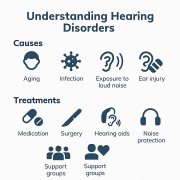
Diseases and disorders of the ear come in all shapes and sizes, degrees, and stages. While the most common cause of hearing loss and tinnitus is aging, the truth is, it is not your age, rather it is your genes. Most of us will inevitably suffer with hearing loss as we get older, not because of working in noise or going to too many rock concerts (not that they make matters any better!), rather most species of mammals (including us) carry genes coded for age-related hearing loss. Presbycusis is the official medical jargon used by specialists when diagnosing this type of hearing loss.

The next most common cause of hearing loss is exposure to loud noises. Unfortunately, proper hearing health is not a common topic in most ‘health classes’, therefore the public has no idea how noisy and how harmful most of our surroundings are. Another misnomer of hearing loss is that a ‘hearing hangover’ (i.e., when you go to a loud concert and your ears ring!) is something we can rebound from. Most scientists and clinicians once believed that this temporary ringing in the ears was something you could recover from and go right back to hearing normally. This is not true.

In the past 10-15 years, study after study has proven, repeatedly, that these ‘hearing hangovers’ have a permanent effect on the auditory system and cause massive damage that cannot be recovered or healed. You might be saying to yourself ‘is this for real…. my hearing was back to normal 2 days after that last wedding I went to.’ The facts are that the damage was real, but the damage will not manifest itself in the form of detectable hearing loss for up to 2-3 decades (20-30 years!). Hopefully, this has your attention now as you think back to all those loud restaurants you went to, the factory you worked in for 6 months, all the times you weed-wacked the lawn, and that rock band you were in when you were a teenager. When you combine your history of noise exposure (both big and small) plus your genetic predisposition to hearing loss as you age… you may have a perfect storm brewing that creates disabling hearing loss and tinnitus.

Rounding out the next most common forms of hearing loss and tinnitus are medication-induced, Meniere’s Disease and sudden-onset. While most prescription drugs that impact the ears are necessary and lifesaving/prolonging, many prescriptions have a side-effect of damaging cells in the ear (technically it is called ototoxicity—meaning it is toxic to the ear). Strong antibiotics such as Ciprofloxacin can be damaging to the ear. Many chemotherapies used for the treatment of cancers have a component that is deadly to the cells in the ear. Even commonly available OTC drugs such as Aspirin and NSAIDS can increase the likelihood of developing hearing loss and tinnitus. And too much quinine (found in tonic water) can damage the ears too!

One of the most disabling causes of hearing loss, which presents with the triad of symptoms, i.e., hearing loss, tinnitus, and dizziness, is Meniere’s Disease. The cause (or pathophysiology) of this disorder is the result of excess fluid trapped inside the inner ear. The overload of fluid will impact both the auditory and balance centers and send misguided information to the brain, rendering the patient deprived of sound input and the feeling of dizziness.

Currently there is no cure for Meniere’s, but there are effective treatments available to alleviate the hearing loss and balance issues. Treatments include the following:

  • Medical Treatment of Hearing Loss and Tinnitus. With advanced treatment technology, cognitive stimulation can restore sound, reduce the ringing, and provide auditory awareness to reduce the risk of falling.
  • Medications. The most disabling symptom of Meniere’s Disease ‘attack’ is dizziness. Prescription drugs are available to relieve dizziness and shorten the attack.
  • Salt Restriction and Diuretics. Limiting salt intake and use of diuretics (water pills) help some people control dizziness by reducing the amount of fluid the body retains, which may help lower fluid volume and pressure in the inner ear.
  • Nutritional & Dietary Changes. Some people report that caffeine, chocolate, and alcohol make their symptoms worse and either avoid or limit them in their diet. Not smoking may also help reduce the symptoms.

For most people who suffer with the instantaneous, life-altering experience of sudden-onset hearing loss, the inability to hear out of one or both ears is a crushing blow. Many times, the diagnosis of this sudden-onset hearing loss and tinnitus includes the medical term ‘idiopathic’, which is the nice way of saying ‘we have no idea why you woke up one day with this terrible hearing loss’. The most important advice for somebody who experiences a sudden change in hearing is to seek out the immediate assistance of a hearing healthcare specialist. It is possible, although not guaranteed, that immediate pharmaceutical intervention can recover some or all hearing.

Take the next step:

What are the Stages of Hearing Loss?

Understanding the Journey: Navigating the Stages of Hearing Loss

If you or a loved one have hearing loss, you are probably used to hearing words like ‘I lost 40% hearing in my right ear’ or ‘my doctor told me I have a mild hearing loss’ or (our personal pet peeve) ‘they said my hearing is normal for my age’. Frankly—each of these is wrong. Just to clarify—there is no such thing as ‘age-adjusted hearing loss’— you either have hearing loss or you don’t. There is no ‘sliding scale’ because of your age and there is no such thing as ‘normal hearing loss’—that is an oxymoron.

Understanding your diagnosis is the first step in any successful treatment plan. Using terms like ‘mild’ or ‘moderate’ do not have much meaning. Additionally, making incorrect statements like ‘40% loss’ does not help anybody and are inaccurate—until you are dead, and somebody goes poking around your ears and brain, a percentage should not be assigned to a hearing loss.

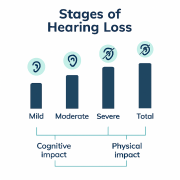
Like nearly all major medical conditions, a hearing loss diagnosis must be ‘staged’ to be best understood and to lay out realistic expectations and prognosis for treatment.

Stage 1

Early-stage hearing loss (15-40 decibels of loss) with some impact on cognitive function.

Patients with Stage 1 hearing loss are caught at the earliest phase of the disorder: thus, having the greatest prognosis for treatment. At this early stage, hearing loss may be beginning to show early signs of impacting cognitive function with some impacts on memory recall and name finding.

Although many people living with this hearing loss may consider it ‘just a nuisance’, it is important to understand that hearing loss is a progressive degenerative disorder that can significantly increase your risk of dementia, falling, and a host of other comorbid disorders.

Even at this earliest stage, these test results indicate marked damage to the nerves that connect the ear to the brain—which can have a host of downstream impacts, including tinnitus, difficulty following a conversation, and implication for memory loss and forgetfulness. Patient symptoms often include noticeable tinnitus (heard in the ears and/or head), subtle difficulty with details of speech (missing the beginning or end of what others are saying), some loss of environmental auditory awareness (i.e., difficulty hearing knocking at the door, the refrigerator, alarm, etc.). In addition, the person will notice conversation is becoming more difficult to follow in background noise (and when watching TV). Patients with Stage 1 hearing loss must be applauded for not waiting and catching this destructive disorder early—before it can fully infiltrate and wreak havoc on the brain.

Stage 1 hearing loss is correlated with a near 200% increased risk of developing cognitive decline and dementia. While that may be a shock to you, what is most important is to understand that research indicates that the early treatment of hearing loss can dramatically reduce that increased risk of dementia (and slow the progression of the disorder). Also, Stage 1 hearing loss significantly increases the risk of falling by 140% (the #1 cause of hospitalizations in older adults). However, with treatment and access to the entire auditory environment, this risk of falling decreases significantly.

Stage 2

Mid stage / significant hearing loss (40-70 decibel of loss) with noted impact on cognitive function.

Patients with Stage 2 hearing loss have most likely waited anywhere from 3-6 years before reporting their symptoms and deciding to act. Fortunately, for most patients with Stage 2, the prognosis for treatment remains high. Although there is notable damage to the neural connections from the ear to the brain, there remains enough treatable hearing to provide proper cognitive stimulation and overcome deficits in clarity, tinnitus, and auditory deprivation.

Patients with Stage 2 hearing loss often report the following host of symptoms: annoying tinnitus (sound heard in the ears and/or head), difficulty hearing others (missing when somebody is speaking to you), lack of ability to hear environmental auditory cues (difficulty hearing when people are walking towards you, safety alarms in the home, a grandchild crying from the other room). With this stage of hearing loss, it is a significant struggle to follow a conversation when with a group of more than 2 and in restaurants.

With Stage 2 hearing loss, the goal is to provide maximum neurocognitive stimulation, which the brain needs to run on all cylinders. In fact, living with untreated hearing loss is like driving 60 mph in second gear—which, over time will wear down the system and cause significant damage. The treatment of hearing loss can dramatically improve cognitive function—this has been shown in numerous studies and it is certainly something our patients have to look forward to!

Stage 2 hearing loss is correlated with a near 300% increased risk of developing cognitive decline and dementia. Again, what is most important is to focus on the positive—which is that research indicates that the early treatment of hearing loss can reduce that increased risk of dementia (and slow the progression of the disorder).  Also, Stage 2 hearing loss significantly increases the risk of falling (the #1 cause of injury-related death in older adults). However, with treatment and access to the entire auditory environment, the risk of falling can decrease dramatically.

Stage 3

Mid-late stage / severe hearing loss (70-90 decibels of loss) with significant impact on cognitive function.

Patients with Stage 3 hearing loss often wait an average of 7-10 years before reporting their symptoms and seeking treatment.

While prognosis is still positive and a successful treatment plan is anticipated, hearing loss at this stage can begin to show a significant impact on cognitive function. At this stage, there is marked damage to the neural connections from ear to brain— which expand beyond the auditory centers and reach deep into the memory, sensory and emotional portions of the brain.

As a result of the neural damage, the patient will experience a myriad of symptoms, including bothersome tinnitus (sounds in the ears and/or head that interfere with hearing, sleep, etc.,), inability to hear what others are saying (even in a quiet environment), lack of ability to hear important environmental auditory sounds (i.e., difficulty hearing the phone, smoke / CO2 alarms). At Stage 3 hearing loss, most patients will begin to avoid social gatherings and isolate themselves as they will not be able to converse and interact in a restaurant or any social setting with 2 or more people.

The auditory stimulation provided at this stage will focus on the areas with the most damage, as well as the portions of the brain that remain most active for hearing. Although individual prognoses may vary, outcomes will be positive and provide access to conversation, even in noisy situations.

Stage 3 hearing loss is correlated with an approximate 400% increased risk of developing cognitive decline and dementia. Although this may seem like a ‘late stage’, all research indicates positive outcomes that can work to reduce the risk of cognitive decline and dementia (and potentially slow the progression of the disorder). Also, Stage 3 hearing loss dramatically increases the risk of falling. However, even at this stage, with treatment and access to the entire auditory environment, the risk of falling can decrease.

Stage 4

Late stage / profound hearing loss (90+decibels of loss) with substantial impact on cognitive function.

Patients with the most advanced stage of hearing loss will benefit from treatment. Period. Despite the significant neural and cognitive damage.

With many medical conditions, ‘Stage 4’ is often thought of as the ‘untreatable’ stage; this does not apply to hearing loss. At Stage 4, there is significant damage to nearly the entire hearing structure and the nerves that connect the ear to the brain. Fortunately, it is less often that we see a ‘first-timer’ patient who presents with Stage 4 on day one.

When left untreated this hearing loss is truly disabling to the person and their family. At this point in the disorder, patients will experience symptoms that alter everyday life, including constant interfering tinnitus (sounds in the ears and/or head that make hearing, sleeping, etc. difficult) inability to hold a conversation with loved ones, lack of ability to hear life-threatening environmental sounds (i.e., inability to hear smoke / CO2 alarms, emergency vehicles). Left untreated, patients with Stage 4 hearing loss will avoid social gatherings and isolate themselves as they are unable to interact with others.

Stage 4 hearing loss is correlated with a near 500% increased risk of developing cognitive decline and dementia. Although it may seem that all hope is lost at this stage, there are tremendous advances in recent technology that can help with the most profound degree of hearing loss to hear well again. All research indicates positive benefits of treatment that may reduce the risk of cognitive decline and dementia (and potentially slow the progression of the disorder). Also, Stage 4 hearing loss severely increases the risk of falling. However, even at this stage, with treatment and access to the auditory environment, the risk of falling can be decreased.

Always be sure that you understand your diagnosis and prognosis before moving forward with your recommended treatment plan.

Take the next step:

Why You Must be Offered a Cognitive Screening for Dementia

Unlocking Sound Wellness: The Vital Role of Hearing Healthcare Specialists Over Primary Care Advice

Dementia is the single largest unaddressed public health threat in the 21st century and we must remain on the front lines of this crisis every day.

We all know a friend, neighbor or loved one who has been touched by Alzheimer’s or dementia and understands the devastating toll this disease takes on families.

It has been nearly a decade since the first reports indicated a strong correlation between hearing loss and dementia. We live, eat, sleep, and breathe this knowledge every day. Since then, Dr. Keith Darrow has become the only National Certified Alzheimer’s Disease and Dementia Care Trainer in the field of hearing healthcare. Our practices do qualitative dementia screenings and offer patients the opportunity for genetic testing of known dementia-related genes. We also offer patients the opportunity to have an F.D.A-cleared (Food and Drug Administration) computerized test of cognitive function.

To put it lightly… we are obsessed with finding ways to help patients understand their dementia risk, improve their cognitive function, and take steps to prevent the disorders of dementia.

Every 3 seconds another person is diagnosed with dementia. That means, in the time it takes you to read this sentence, another person has been diagnosed with dementia. That is another person who has been handed down the diagnosis of fatal brain failure, another family that will have to pay the emotional toll of caring for a loved one at least ten years beyond that person’s mental capabilities. At an average cost of $57,000 per year to care for a loved one with dementia—it is also one of the costliest diseases on the planet.

Nearly 9 out of 10 older adults get their blood pressure checked when they visit their primary care doctors. Only 16% are even asked about problems with memory or thinking.

Our assessment tool, Cognivue™, is an important and innovative psychometric tool for cognitive evaluation. This test evaluates six cognitive domains: visuospatial, executive function/attention, naming/language, memory, delayed recall, and abstraction. With this tool, we also measure two speed performance parameters: reaction time and speed processing.

Every hearing healthcare practice in America should have a quantifiable means of assessing cognitive function and evaluating dementia risk. Here are two things we know, unequivocally:

  1. Hearing loss is correlated with an increased risk of dementia by as much as 200-500% (depending on degree of hearing loss).
  2. Four out of every ten (or 40%) of people diagnosed with dementia are considered PREVENTABLE.

Perhaps the scariest medical statistic we have ever come across was from a survey of Medicare beneficiaries: Half of Americans with Alzheimer’s disease have not been diagnosed, and half of those with a diagnosis have not been told about it. If you need to, please re-read that last sentence. Thankfully, new state laws are popping up all over our country that address this issue and require proper dementia training of most healthcare clinicians.

In 2017, the European Dementia Commission put forth the ‘holy grail’ on the state of dementia in our world. We will not bore you, or perhaps scare you, with the details, i.e., the overwhelming number of people who have dementia, the exponential increase in expected dementia diagnoses in the next 10-20 years, or all the things we do on a daily basis to increase our risk of dementia, but we will summarize how you can err on the side of caution and increase your chances of living a dementia-free life!     A report, published in the Lancet (FYI—the Lancet is among the oldest, most respected, and most widely read medical journals in the world) and recently updated in 2020 lays out the ‘How To’ of preventing dementia.

NOTE: These twelve items are listed IN ORDER of percentage chance of avoiding dementia if this risk is eliminated:

  1. Hearing Loss—The early medical treatment of hearing loss is the most modifiable lifestyle factor for reducing the risk of dementia.
  2. Increased Education: Your mother was right—stay in school and never stop learning.
  3. Stop Smoking: If the threats of lung cancer and emphysema are not enough to get you to stop smoking, perhaps ending up without dementia will.
  4. Depression: Addressing depression in older age is critically important for cognitive health, and healthy hearing goes a long way to reducing depression.
  5. Social Isolation: Hearing loss is a major contributor to social isolation and withdrawal from friends and family. Treat your hearing loss and stop living in isolation.
  6. Traumatic Brain Injury (TBI): While most TBIs are the result of an accident, preventative measures should always be taken to reduce the incidence of TBI, therefore reducing the risk of dementia.
  7. Physical Inactivity: People with hearing loss are less physically active. This has been shown time and time again in research and likely is the result of increased social isolation in older adults with hearing loss.
  8. Hypertension: What is good for the heart is good for the mind! Cardiac conditions compromise blood flow to nearly all major organs, including the brain and the ear. Love yourself and take care of your heart.
  9. Air Pollution: This was recently added to the list as air pollution might act via vascular and/or respiratory mechanisms and reduce proper blood and oxygen flow to the brain.
  10. Diabetes: Several studies suggest that the brains of people with Alzheimer’s disease are in a ‘diabetic state’, partly due to the decrease and insensitivity to insulin. Diabetics are at least twice as likely to experience dementia.
  11. Obesity: Being overweight is an emerging concern when it comes to dementia. The rates of increased BMI in older adults are growing and may be contributing to cognitive decline.
  12. Alcohol Intake: Like most things we enjoy in life, moderation is key. Consuming less than 21 units of alcohol per week (the equivalent of two bottles of wine per week) can help to reduce the risk of cognitive decline and dementia as we age.

Because we are obsessed with helping people prevent dementia, allow us to summarize the above findings of the Dementia Prevention, Intervention and Care Report (2020) two more ways:

  1. Treating hearing loss is:
    • 8 times more effective at reducing your risk of dementia than reducing obesity.
    • 8 times more effective at reducing your risk of dementia than reducing diabetes.
    • 4 times more effective at reducing your risk of dementia than reducing hypertension.
    • 4 times more effective at reducing your risk of dementia than increasing physical activity, and
    • 2 times more effective at reducing your risk of dementia than increasing social engagement with others.
  2. Treating hearing loss is more effective at reducing your risk of dementia than if you reduce obesity, diabetes, alcohol consumption, and heart disease and increase physical activity, combined!

We hope this gets our point across. While we certainly cannot guarantee that if you do everything on this list that you will not get dementia, we do guarantee that you are doing everything you possibly can to reduce your risk of getting dementia.

Take the next step:

How to Get More Information Choose a Highly Successful Hearing Healthcare Practitioner

Selecting the Pinnacle of Hearing Health: Finding Your Ideal Hearing Care Professional

Why is that important? Wouldn’t you get a “better deal” from one barely getting the light bill paid? Maybe. But an over eager hearing aid widget pusher might be seeing needs that are more urgent than they really are.

What are some good clues to select a great hearing healthcare practitioner?

We have got two: One, she/he is busy. Two, her/his practice is busy. We assure you, the ability of advertising to attract patients is limited and it is expensive. When you see a really, really, busy practice there are probably a whole lot of patient referrals. Let’s face it—nobody enthusiastically refers if they feel they were lied to or treated badly, sold something they did not need, and put their prescription technology in their underwear draw. And they probably wouldn’t come to that practice if they had to keep coming back to ‘fix a few things’ or were overcharged. People only tell other people about their great experiences when they have their trust earned and when they have a truly unique experience.

We keep our offices very busy. Yes, we do some marketing. But mostly, our practices thrive on patient referrals. Not that we would anyway, but we do not need to wrangle you into more expensive care than you need to get the best outcome. We do not need to “sell” four more sets of hearing aid widgets this month to win a cruise from the manufacturer—and yes, that stuff goes on in some practices! There’s an old cartoon from The Wall Street Journal with a bunch of executives in a boardroom at a conference table, one hollering, “Ethics? Ethics? We can’t afford ethics!”

We build businesses on ethics and earned trust. And you do not just need a doctor to sell you some widget; you need an honest, trusted advisor.

The other clue: a great hearing healthcare specialist is not cheap. Our fees are calculated to allow for “Cadillac + Care” in every respect, to put no downward financial pressure on how we care for patients, and to never compromise a patient’s care. We never settle for “this is probably good enough.”

If we were you, we would worry if we could find a specialist that is a lot cheaper anywhere else. If you do find one, know this: behind closed doors they are probably asking, “can we do this cheaper?”. Is that the question you want discussed by your care team at every step of your treatment process?

There is both a science and art to this. Our specialists and staff are all highly trained to produce state-of-the-art outcomes, nothing less. The specialist truly makes a difference. That is why we tell everybody to get a highly successful hearing healthcare specialist.

The Top Ten Things You Should know Before Choosing a Hearing Healthcare Specialist.

This is something you want to be sure about. We have just suggested one big consideration: a highly successful practice. Here are ten more:

  1. Are they specialists?
    • Tools have never created the skill. They’re simply a conduit teamed with education, talent, experience, and knowledge. Audiology tools have never made the audiologist, but when the best tools are in the hands of the best specialists, magic happens.
    • All hearing specialists should be licensed by the state in which they practice, but not all hearing specialists have taken the next step to become members of the Excellence In Audiology™ network. This organization of hearing health care specialists have both the state-of-the-art tools and proven knowledge to do more than sell you a traditional hearing aid—their comprehensive hearing and cognitive treatment programs improve your hearing and cognitive function so you can maintain your independence longer—that independence is priceless!
    • To be a part of this network, a hearing healthcare specialist must be thoroughly trained and tested to demonstrate their knowledge of the auditory system, clinical skills, and judgment. You might consider a specialist who understands the hearing and brain connection as ‘treating hearing loss’ was recently named the single most modifiable risk factor for the prevention of the mind-robbing disease of dementia.
    • Signs of a specialist:
      • Incorporates cognitive screenings into testing protocols.
      • Offers comprehensive hearing and cognitive treatment programs, not just traditional hearing aids.
      • Treatment programs include ongoing brain training.
      • Includes exercises.
      • Treatment technology is updated over time, without additional fees!
  2. Do they have a medical office (or a sales office)?
    • For years, the profession of audiology has received a bad reputation for its focus on the sale of traditional hearing aids by former used-car salesmen. In the audiology world it is not hard to open a shop on a shoestring budget and call yourself a ‘hearing aid specialist’.
    • When determining your family’s next hearing healthcare specialist, we recommend you understand the treatment philosophy and purpose of the founder or specialist. Take the time to research his/her office, treatment team, website, location, and online testimonials and reviews. During your research, be on the lookout for a stand-alone location or a medical setting that was founded many years ago and has helped thousands of individuals in your community.
    • Medical-based offices will focus on the signs and symptoms of hearing loss and tinnitus, the detrimental impact of untreated and undertreated health conditions. You will notice that medical-based offices include many free reports, books, videos, and educational opportunities to learn more about you or a loved ones’ condition. Remember, the educated patient is the best patient.
    • Sales-based offices will focus on the makes, models, and prices of their traditional hearing aid technologies. We often refer to these providers and offices as ‘widget salesmen’. Be on the lookout for words like ‘FREE Test-Drive’, ‘FREE Demo’, or ‘Try Before You Buy’ which will be on their sales materials and advertising. Remember, free is just another word for ‘has no value’.
  3. Do they think brain health first?
    • It might seem strange and go against everything you were taught in pre-school, but we don’t ‘hear’ with our ears. The ears are just a receptor of sound, which is then transferred to our auditory nerve, and finally into our brain where the speech understanding and cognitive process of deciphering sounds into words takes place. Dr. Keith Darrow, a neuroscientist who has worked in the lab for over a decade and seen up close how the system works, says that this comes naturally to him, but to many hearing specialists without formal training or membership in a community like the Excellence in Audiology network, it is often overlooked.
    • While words like dementia, cognitive decline, cognitive overload, progressive degenerative disorders, and auditory system damage might seem scary, rest assured a hearing specialist and his/her team who thinks ‘Brain Health First’ will undoubtedly be using these words when discussing your hearing and tinnitus symptoms with you. If your specialist is not using these words or is focused on things like lifestyle charts, Bluetooth, rechargeable batteries, and TV adapters, you will know they are thinking ‘hearing aids first’ and not ‘Brain Health First’.
    • Finding a local specialist who thinks ‘Brain Health First’ will make sure you and/or your loved one is not only improving your hearing, but also doing everything possible to re-duce the increased risk of cognitive decline and dementia associated with hearing loss and auditory system damage. Treatment options from a ‘Brain Health First’ specialist will include the most modern hearing technology (sometimes called NeuroTechnology™) designed with the cognitive (brain) aspects of hearing loss in mind, including restoring the ability to hear in noise, filtering out background sounds, and boosting the soft-speech details needed to understand those around you.
      • Questions to ask:
        • What cognitive screening protocols do you use in your office?
          • Answers should include: “Cognivue,” “Word Recognition Testing,” and “Speech in Noise Testing.”
        • Does your treatment plan include new treatment technology?
          • Answers should include: Our treatment plans only include new treatment technology (or NeuroTechnology™ . . . and never ‘traditional hearing aids’.
  4. Do they provide pre-appointment education?
    • Most traditional hearing aid sales offices will be in a hurry to get you right in for a “FREE Hearing Test”. This is so they have the first chance to ‘sell’ you on their traditional hearing aid.
    • Our recommendation is to find a medical-based office with a hearing healthcare specialist who goes out of their way to provide you with pre-appointment education to help you and your family make the best decision on this major medical decision.
    • Some items we recommend requesting prior to your appointment:
      • 7- to 14-day delay before your appointment to review all materials sent to you
      • a book or publication by the practice owner or founder
      • any online presentations or educational materials available
      • a detailed account of what is included in their comprehensive treatment program
      • the cost of their all-inclusive monthly treatment plan
      • what to expect during your first appointment
    • It won’t take you long to differentiate which office is focused on providing you with education and conversation as opposed to looking to get you in as soon as possible.
  5. Do they offer guarantees? If so, what are they?
    • No matter which hearing specialist you choose, ultimately you are beginning a relationship with them. A relationship based upon a significant investment of both time and money to solve you or a loved ones’ hearing loss or tinnitus problem. As with any relationship, it should be based upon trust and a guarantee that you will experience the expected outcome you are looking for.
    • The most common attempt at a guarantee in the field of hearing healthcare and audiology is a “traditional hearing aid return period.” This is NOT a guarantee, this is a law required by every hearing healthcare specialist who is selling a traditional hearing aid widget.
    • When we speak of a ‘guarantee’ we are referring to the commitment of the founder, or owner, or hearing healthcare specialist you choose.
      • Do they guarantee your ability to hear will be restored to its full potential?
      • Do they guarantee if you are unhappy at any point during the adaptation period you will part ways as friends and not spend a single penny for treatment received so far?
      • Do they guarantee your hearing and tinnitus treatment is fully covered with no additional fees during your treatment program?
      • Do they guarantee that at any time during your four-year treatment plan that if your hearing loss or tinnitus progressives severely enough that it requires a new prescription that you will get that new prescription without increased monthly fees?
      • Do they guarantee that your monthly cost of treatment will never increase due to rising costs or inflation?
    • Now those are guarantees!
  6. Are they using the latest treatment options available?
    • Modern hearing loss diagnosis and treatment differs a great deal from years past. With the evolution of computer designed technologies, hearing specialists with the proper equipment will be able to diagnose, treat, and improve your hearing and cognitive functions more accurately. Be on the lookout for a hearing specialist with modern technology and office vibe as opposed to someone who is stuck with antiquated technologies that will hold you back from living your best and healthiest life.
    • Modern technologies that should be used by a hearing specialist include:
      • Speech in Noise Testing to determine your ability to hear in noise
      • Cognitive Screening with Cognivue® Equipment
      • new treatment technology that has artificial intelligence which focuses on restoring stimulation to the auditory system; improving hearing and reducing tinnitus
      • pre-and post-treatment testing to prove your results both in the testing booth and in background noise
      • Audioscan Verfit2 Real-Ear Measurements to objectively measure the benefit of your new treatment
      • Live-Speech Mapping to verify you are hearing all parts of the spoken language
      • BrainHQ brain training program for ongoing memory
      • and processing speed improvements.
  7. Do they offer a comprehensive treatment membership?
    • Long gone are the days of spending thousands of dollars upfront on traditional hearing aids; don’t do it!
    • Hearing loss is the third most common chronic condition affecting seniors in our communities. Like any major medical condition, the treatment of hearing loss, tinnitus and the associated cognitive impacts are not a one-and-done purchase of a hearing aid widget, but rather an ongoing monthly medical treatment.   When you are searching for a hearing healthcare specialist, we recommend you find one who has a monthly treatment program or membership that allows you to begin treatment without investing thousands of dollars on day one.
    • An all-inclusive treatment membership should include everything you need to properly treat your hearing and tinnitus, including:
      • your prescribed hearing technology
      • any supplies, accessories, or batteries you’ll need
      • coverage for loss or damage at a low deductible
      • all your office visits and annual evaluations
      • yearly cognitive/dementia risk screenings
      • early access to events
      • birthday gifts
      • special new release education materials
      • supplements
      • BrainHQ
      • a price lock guarantee so you don’t have to worry about price increases in the future.
  8. Do you get a direct phone number for 24/7 support or questions?
    • Hearing is 24/7, and your support line should be too.
    • Each time a patient embarks on the journey of improved hearing or reduced tinnitus, there is an adaptation period for the patient and their family. This period can take up to 60 days (perhaps longer for the most difficult cases of tinnitus) and is unique to each patient. Whether you or your loved one have a simple question, or need reassurance, your hearing healthcare specialist should give you a direct number to a patient experience coordinator just in case.
    • In addition to the complex hearing and cognitive changes that will happen as we begin restoring the stimulation to your auditory system, there can be moments of minor irritation or discomfort like wearing a new pair of shoes or prescription eyeglasses. Whatever question or concern you have, don’t hesitate to ask!
    • A medical-based hearing healthcare specialist will provide you the means for direct support, as well as an established new treatment plan consisting of 3-4 appointments during the first 45-60 days of treatment. You should plan to visit your specialist four times per year for ongoing maintenance, reevaluations, and prescription updates in addition to any fun or interactive patient events they may offer.
    • Remember, you should not have to pay additional fees or costs for this direct phone number, visits, patient events or ongoing hearing healthcare. It should be included in your comprehensive monthly treatment plan.
  9. Do they make you feel special and comfortable?
    • Regardless of if you are reading this report for your own hearing loss or tinnitus treatment, for a spouse, or another family member, you are the most important part of the healthcare practice.
    • The best hearing healthcare specialists, practices, and teams would be wise to remember that without the patient they would not have careers. As we’ve traveled the country speaking, educating, and working with private practices, we continue to teach based upon the principles of Disney Magic, the Ritz Carlton Gold Standard, and the empathy found at the Cleveland Clinic.
    • When you walk into your new hearing healthcare specialist’s office, you should be made to feel comfortable and welcome. Empathy, compassion, and understanding are very important to the healing process.
    • Here are some things we recommend you should receive:
      • pre-appointment information
      • welcome gift
      • a great look, feel, and smell to the office
      • a big thank you
      • treat or drink
      • walked to your treatment room
      • they should get to know you the person
      • understand your symptoms and desired outcome
      • a fond farewell to return.
    • If you’d like the feedback of others prior to booking an appointment, try visiting their online views or video testimonials to learn more about what to expect at your appointment.
  10. Do they have a great reputation?
    • “Trust; but verify!”
    • When it comes to choosing a hearing healthcare specialist, we prefer no other phrase.
    • With the internet today, it is extremely easy to pull up ratings, reviews, and testimonials from other patients. Simply go to Google, Facebook, HealthyHearing, or Yelp and search for audiology reviews in your town. We would recommend choosing the hearing healthcare specialist with the most reviews at the highest rating. This gives me comfort in knowing that they are busy enough to get the most reviews, and great enough to earn that high 5-star reputation.
    • In addition, with the growth of YouTube, many practices now have a YouTube channel full of real-life patients on video giving their own personal testimonial about the hearing healthcare specialist and office. So, remember, trust that your research has fulfilled the first nine questions of this report, but don’t hesitate to verify with real patient reviews, testimonials, and references.
    • And never be shy about asking for references and go directly to the source! You have the right to call any hearing healthcare specialist and ask for a list of references who may be patients and/or local physicians who have volunteered to help advise other patients as they first enter the world of hearing loss and tinnitus treatment.
    • Okay, we know we said the list was only 10, but this last one is important to consider!
  11. Will they make treatment affordable?
    • We realize that we were only supposed to list the ‘Top 10 Things You Must Know Before Choosing a Hearing Healthcare Specialist,’ but we couldn’t leave out some tips on making sure your choice of hearing healthcare specialist never allows a treatment decision to become a financial decision.
    • Once you are comfortable knowing the answers to the Top-10 Questions and have chosen a hearing healthcare specialist to treat you, your spouse, or your loved one, the next question is typically:
    • “Is this comprehensive treatment plan affordable?”
    • When it comes to affordability, there is no greater pain than having to turn a patient away due to their financial situation. Thankfully our new treatment membership programs allow us to treat nearly every patient by reducing costs to a low, monthly, affordable payment.
    • Benefits of Membership Based Hearing Healthcare:
      • avoid the large upfront cost of traditional hearing aids
      • low monthly membership plans for the medical treatment of hearing loss and tinnitus
      • all-inclusive coverage for your hearing and tinnitus treatment needs
      • price lock guarantee so your treatment costs won’t increase over time
      • No patient is denied the care they need due to bad credit/no credit.

Take the next step:

Why a Hearing Healthcare Specialist? Why Not Just Ask Your Primary Care?

Unlocking Sound Wellness: The Vital Role of Hearing Healthcare Specialists Over Primary Care Advice

Discover a world of clearer communication and vibrant living – visit our hearing loss website for crucial insights and expert guidance on reclaiming the full spectrum of sound in your life. www.salushearing.com.

You undoubtedly already have a primary care physician (even if you don’t see her/him often enough!).

  • “But isn’t seeing a hearing specialist going to cost me more?”
  • “What if I’m too busy?
  • “More appointments?”
  • “Do I really need to get regular audiology check-ups?”

All reasonable questions.

It is true that, today, quite a few primary care doctors dance over into our territory (and even into other territories), and although the primary care doctor is a great centralized person to review all your medical records, when you need specialty care, you need to seek a specialist. As an example, anybody reading this who has a heart condition or diabetes will absolutely have a cardiovascular and endocrinology specialist, respectively.

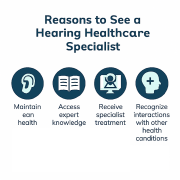
Specifically, those who specialize in hearing healthcare have additional training in the diagnosis and treatment of auditory conditions, including:

  • presbycusis (age-related hearing loss)
  • noise-induced hearing loss
  • Meniere’s disease
  • tinnitus
  • unilateral deafness
  • sudden-onset hearing loss
  • auditory neuropathy
  • vestibular schwannoma

These are NOT primary care issues. They are hearing healthcare issues.

There are some things for which a generalist or ‘jack-of-all-trades’ will do. For other things, you know it is smart to seek out the best specialist there is. When a patient is dealing with the dreaded cancer diagnosis, you do not want them to be under the care of a generalist. This is not to take anything away from all that a generalist has achieved and can do, rather it is to say that a generalist has no business treating cancer. Sorry, not sorry. We often think of the generalist in medicine as the ‘general contractor’ (G.C.) in construction. The best G.C. knows his/her limits and always hires the best electrician, the best carpenter, the best plumber, etc.

To elaborate—if all your income is on a single W-2 from one employer and you have simple ordinary deductions, getting your taxes prepared for the cheapest fee at the seasonal tax office that opens in your neighborhood shopping center is probably fine (heck, maybe you can even do it yourself!). But, if you have a W-2, 1099, investment income from real estate, depreciation on real estate in several states, own stocks and own a Christmas tree farm, you are going to need a good accountant, i.e., a C.P.A.

Or let’s say you need a simple will—leaving everything to your surviving spouse or only child is very straightforward. But, if you are of some means and have a few children, grandchildren, charities you support, investments, you are going to need to see a specialist: an estate planning attorney (not just an attorney).

Hearing healthcare is no different.

While these analogies have driven home our point, it is important to note that the same goes for your healthcare. When you suffer with the symptoms of hearing loss, including tinnitus, social isolation, memory loss, difficulty following a conversation, frustration, etc., you need a specialist. When you have hearing loss, a progressive degenerative disorder that impacts your social, emotional, physical, and cognitive health, you need a specialist.

Now that we have (hopefully) convinced you of the need to see a hearing healthcare specialist, we must help guide you on how to pick the RIGHT hearing healthcare specialist.

First, do they focus on the medical treatment of hearing loss, or do they just sell hearing aids? It does not take a special degree or a lot of money to open a hearing aid shop. When you are searching for a hearing healthcare specialist, make sure you understand their credentials and medical affiliations. As a rule of thumb, if the practice you are visiting is Excellence In Audiology™ approved, you are in the right place!

Second, is the medical treatment plan focused on treating your hearing loss and tinnitus, reducing your risk of dementia, maintaining your independence, decreasing your risk of falling, maximizing cognitive stimulation, and increasing your overall quality of life…. or do they just sell hearing aids? Unfortunately, the letters that come after somebody’s name do not tell the full story. We have seen many ‘bad apples’ that are doctors of audiology, board cer tified hearing specialists and audioprosthologist. When a provider offers an inexpertly applied, standardized solution, they tend to be cheaper than the fees of a specialist that offers custom treatment plans. Cheaper in hearing healthcare implies there is an economic pressure on them to do treatment as quickly and as simply as possible, because they’ve ‘cut it thin’. Cheaper in hearing healthcare also means that treatment outcomes may be compromised.

In this case, it is worth remembering that the medical treatment provided for hearing loss has permanent, lifelong, and life-impacting consequences. This concerns your health, including your risk of dementia, risk of falls, your ability to feel accepted and socialize with others, career longevity and your ability to be independent of others.

When possible, you always want to choose a clinician who specializes in the treatment of your hearing loss and tinnitus.

You may ask, ‘how do I know if my hearing healthcare provider is an audiologist or hearing specialist?’ It’s a great question and a critical one to ask as you seek treatment for your hearing loss and tinnitus.

Alternatively, you can ask your hearing care provider if she or he has completed a fellowship in audiology or if they underwent the training to become a board-certified hearing specialist. You can also check with your state licensing board.

Do your homework; be a “hearing detective” while on the hunt for such vital information. Look for the words “medical treatment of hearing loss” or ask your generalist for a referral to a hearing healthcare specialist (not someone who just sells hearing aids!). In urban and suburban areas, it will take minimal effort to find a specialist. In more remote, rural locations, your search might take you to another city or town. Do not be afraid to travel for the best healthcare—you are worth it.

Side note: there is no disrespect between hearing healthcare providers and primary care/generalist providers. As a matter of fact, many audiology patients are referred by their PCP. These are great, capable, and caring professionals who know where their expertise begins and ends and do not let ego or income opportunity step in front of what they know is best for their patient.

Just as the generalist doctor must refer her/his patients with possible or significant heart disease to the cardiologist, and if need be, the cardiologist refers to the cardiovascular surgeon, the best generalists refer patients with audiology needs to the hearing healthcare specialist.

Take the next step:

Why Must We Treat Hearing Loss & Tinnitus?

Lost in a Sea of Sound: How Tinnitus Amplifies Restaurant Noise

Is treating hearing loss nothing more than a great conspiracy (like Disney always trying to squeeze money out of patrons)?

Then, and now, there may be some overprescribing or even premature prescribing by some hearing healthcare providers (remember—there are bad apples in every orchard!)

But there is a very legitimate, clinically documented, medically approved, and 90+ percent of the time, clearly visible reason some adults, sometimes as young as their 40s, need treatment and care: tinnitus.

Tinnitus (pronounced tin-ni-tus or tin-night-us; either is correct!), is most often attributed to the progressive and degenerative loss of nerves connecting the ear to the brain, (aka HEARING LOSS). Tinnitus is just the fancy-pants word for ‘ringing in your ears’ or ‘ringing in your head’. Ironically, people with hearing loss are often described as ‘’suffering in silence’, when in fact, that is exactly the opposite of what most people with hearing loss deal with as the tinnitus can severely impact living.

Discover a world of support and solutions for hearing loss and tinnitus – visit our website today to empower yourself with knowledge, connect with a community, and take the first step towards a life filled with clearer sounds and renewed well-being. salushearing.com.

Simply put, as the nerves break down (from aging, genetics, noise exposure, medications, virus, etc.,) the brain will automatically make up for the missing signal and create the false percep tion of sound. This ‘central gain’ of neural activity can be altered with treatment (aka neuroplasticity) and reduce the experience of tinnitus. The patients treated in our practices have tremendous success in reducing and/or eliminating their tinnitus. Chances are, when we begin your treatment, you have an 80+% probability of living with less (or no) tinnitus. While I am not much of a gambler… I like those odds!

If you or your loved one are suffering from any, several, or all the following early indicators of hearing loss and tinnitus, consider having them addressed by a hearing healthcare specialist sooner rather than later:

  1. Noises in Your Ears or Head
    • Tinnitus is the internal alarm letting you know something is wrong. If left untreated, it will get worse. Tinnitus can interrupt your sleep, cause headaches, and increase stress and frustration.
  2. Difficulty Hearing Others
    • Being left out of the conversation can be frustrating and embarrassing. Trust us, the more you ‘smile and nod’ your way through a conversation, the more people look at you and think ‘wow, she/he is getting old’.
  3. Memory Issues
    • It is now considered a medical truth that hearing loss can increase the risk of cognitive decline and dementia by as much as 200-500%, depending on degree of hearing loss. This means that even a “mild” hearing loss (which, we believe, is a foolish term used to describe hearing loss!) can increase the risk of dementia by 200%. Early signs that hearing loss and tinnitus may be impacting your memory include:
      • memory loss that disrupts daily life (your spouse or children are getting mad at you for not remembering things)
      • challenges in planning or problem solving (getting more confused that you normally do)
      • difficulty completing familiar tasks (not completing your tasks and ‘to-do’ lists)
      • confusion with time or place (losing track of time and location)
      • problems identifying words and names (what was her name again?)
      • misplacing things (losing your car keys way more than you should!)
      • difficulty retracing steps (‘wait a minute, how did I get here?!?!’)
      • withdrawal from others (‘nah, I would rather stay in than go out with friends’)
      • changes in mood and personality (becoming more frustrated and anxious than you ever used to be)

If you notice any of these signs in yourself or your loved one, do something about it, today!

The right hearing healthcare provider understands the importance of early intervention, or as we most often say to patients, you have to catch it early and treat it early’.     The right hearing healthcare provider can help you understand the implication of cognitive decline, help you address how your hearing loss is playing a role in your decline, help you understand the other risk factors of cognitive decline and dementia, and help you with additional resources.

The first question then is: do you have or show all the signs of early hearing loss, a progressive degenerative disorder? Second: if so, what should be done about it? Third: when?

To answer all these questions, the first comprehensive audiology exam should occur at 50 years of age. We passionately believe in the expression ‘Ears and Rears’—the two things you must get checked when turning 50 years young. With early and peri odic audiology exams, you may avoid the dire consequences of living with untreated hearing loss, the extra costs of living with untreated hearing loss, and living without the embarrassment and frustration related to untreated hearing loss. And do not forget, mid-life treatment of hearing loss is at the top of the list of ways in which you can prevent dementia.

Waiting will have profoundly dire consequences, often requiring more treatment, higher costs, and poorerprognosis! What too many patients fail to realize is that the signs of hearing loss are urgent and should be treated as such. We often say to patients ‘the time for treatment is yesterday!’ If you or your loved one need medical treatment for hearing loss—now or at some predictable future time—the outcome of the initial exam can help lead to more sensible decisions.

Let us be empathetically clear. We are not in the business of treating hearing loss for people who do not need it. Our offices are not hearing aid stores.

We are in the business of helping people and their families obtain the right medical treatment of hearing loss and tinnitus if needed, access to treatment, affordable treatment, and the opportunity to hear and live their absolute best. We believe the best patient is the educated patient. In our offices, you are never told what to do. You are provided with factual information, no medical jargon, and in plain English the ‘reasons why’ you have hearing loss and tinnitus, and what your treatment options are.

Every adult with hearing loss and tinnitus needs treatment. But not all treatment is created equal. Together, we will collaborate with you to figure out what is, or is not needed, and what options are the best. And we will never compromise.

Take the next step: