
Assistant avatar
Need help?
I'm available 24/7 to help with your hearing and tinnitus needs.

Hearing Health

Q&A: What To Expect At A Hearing Evaluation

What To Expect At A Hearing Evaluation

Q: What can I expect at my complete hearing evaluation?

A: Many people think a hearing evaluation is where your provider plays a tone, and you simply indicate whether you can hear it. Fortunately, a hearing evaluation is more thorough than that and happens in four steps.


A typical hearing evaluation lasts from 30 to 90 minutes, and we encourage you to bring a trusted loved one with you. We find that a complementary perspective can help paint a complete picture of how your hearing loss is affecting you and your family. They can also take notes for you to refer back to later.

The Conversation

During this step, we review and discuss your medical history. You describe what sort of hearing problems you experience in common situations and how the hearing issues affect you and your loved ones.

But we’ll go beyond that, because the better I know you, the better I can custom-tailor a solution to your unique hearing loss.

We discuss your workplace, your hobbies and activities, and your family life. We do this so I can understand what might be causing your hearing loss as well as what things are key to your hearing lifestyle now and moving forward.

The Examination

Did you know sometimes resolving hearing loss is as simple as a good ear cleaning? That’s why the first thing that happens after our conversation is an ear inspection with something called an otoscope. This allows me to see if earwax, fluid, or debris is blocking your ear canal and whether a part of your ear is damaged.

The Diagnostic Evaluation

This comprehensive evaluation comprises tests to determine the degree and type of your hearing loss as well as the conditions of your outer and middle ear. Which tests are performed depends on your age, symptoms, and medical history. Everyone, however, receives the first three tests.

  1. Pure-tone air-conduction test
    This test is what people think of as a hearing screening or test. You put on headphones, listen for beeps or tones, and indicate which sounds you can hear. With this test, I can determine the quietest sound you can hear at different pitches.
  2. Bone-conduction test
    A different kind of headphone is used for this test. It tells me from where your hearing loss most likely originates and, therefore, what kind it is.
  3. Speech test
    You will hear words via headphones and you’ll repeat them. This measures how well you hear and understand words at different volumes.
  4. Tympanometry
    Placing a probe at the end of your ear canal, I will painlessly use air-pressure changes to see if your eardrum moves correctly, doesn’t move enough, or has a hole in it.
  5. Otoacoustic emissions test
    Using a different kind of probe, I will send a sound into your ear canal. Based on how your inner ear responds, I can learn information about the very tiny sound-receptor cells in your inner ear.


The Solution

Treatment options are based on all of the preceding steps. Because no two hearing losses are the same, no two solutions are, either.

Reviewing the results
We’ll review the results of your examination and diagnostic tests to determine whether you have hearing loss, what type, and what your options are moving forward. For example, you might require further evaluation from an ear specialist if the physical examination reveals damage to your ear.

Technology options
If we decide technology is your best option, we’ll determine together what style and level of technology will best support your hearing goals.

For example, some people require technology that filters out lots of background noise, whereas others don’t. Some people have ear canals that will accommodate completely-in-the-canal technology; others don’t.

An Active Participant

This process is all about your unique hearing needs. Don’t be afraid to ask questions, request that I repeat something, or be candid. This evaluation is the beginning of a relationship, not a transaction. Your active participation will lead to the most satisfying outcome for your hearing health.

Contact us if you’d like to know more about the process or to schedule an evaluation!

Hearing Aids + Your Brain

You won’t “mind” this news about better hearing and improved cognition!

Does hearing aid use help your brain? A growing amount of research associates hearing technology with improved cognition and slowed or decreased risk of cognitive decline. Get the latest on research that supports your better-hearing health — and your mind.


Have you heard? Yet another study links hearing aid use to reduced risk of cognitive decline!

We’ve long talked about connections between hearing and the brain. They work together to help keep you empowered and engaged, so it’s no wonder that hearing difficulties could go hand in hand with cognitive problems.

The good news? An increasing volume of research links hearing loss treatment to improved brain function or reduced risk of cognitive impairment.

A University of Melbourne study published in early 2020, for example, suggests that “more frequent use of hearing aids was associated with greater improvements in cognitive function,” per a university news release.

Investigators, whose study assessed nearly 100 hearing-impaired adults aged 62 to 82 before and after an 18-month period of hearing aid use, also discovered substantial improvement in “speech perception, self-reported listening disability and quality of life.”

“Most notably,” according to the release, “97.3 percent of participants in this study showed either clinically significant improvement or stability in executive function — their mental ability to plan, organise information and initiate tasks.”

The conclusions dovetail with other various studies over the years whose data suggest, respectively, that with hearing aid use:

As you can see, hearing health is connected to more than just the power of communication, and hearing aids can play a big role in your overall wellness. If you have questions about hearing and brain health or if it’s been a while since your last hearing exam, don’t wait. Contact our experienced team today. Together, let’s keep you hearing — and living — your best.

The Sound Void: How Hearing Loss Sneaks Up on You

The Sound Void: How Hearing Loss Sneaks Up on You

When you come to your first appointment with us, we encourage you to bring a companion, someone who spends a lot of time with you. Why is that? Because they’re able to give us a different perspective on your hearing loss. In fact, your companion probably noticed your hearing loss — and how it was affecting you — before you did.

But how is that possible if you’re the one with hearing loss?


How Sound Works

To begin with, it helps to understand how sound works. Most people think hearing loss is a question of volume. But that’s only part of the story. Sound is a combination of frequency (also called pitch) and intensity (also called loudness).

Frequency

Frequency measures how fast (or how frequently) a sound wave vibrates. High frequency means a high pitch, like the notes on the right side of a piano, and low frequency means low pitch, like the notes on the left side of a piano.

Intensity

Intensity measures loudness. A whisper has low intensity, and a shout has high intensity.

Frequency and Intensity Together

Each sound is a combination of these two qualities.

  • A baby screaming has high frequency and high intensity.
  • A man shouting has low frequency and high intensity.
  • The sound of leaves rustling has high frequency and low intensity.
  • A rumble of thunder has low frequency and high intensity.


The Sound Void®

Knowing how sound works helps us understand Sound Voids. We use the term Sound Void to refer to any moment lacking in clarity. Sound Voids have a lot to do with why your companion probably picked up on your hearing loss before you did.

Sound Voids happen all the time: Allergies or a cold affect your ears, leading to increased chance of misunderstanding what people say. Even a buildup of earwax can lead to an increase in Sound Voids.

But Sound Voids are also common with noise-induced or age-related hearing loss. Early on in these types of hearing loss, when someone speaks to you, you miss the high-frequency sounds, such as s, sh, c, ch, p, f, and h. These sounds help you identify words. With those sounds missing, “cat” could be mistaken for “hat” and “pickle” for “fickle.”

With this type of Sound Void, the intensities aren’t the problem — it’s the frequencies. In other words, you can hear people speaking just fine, but sometimes you misunderstand them.

At this early stage, what is actually a hearing loss truly seems to you like a momentary lack of clarity. You assume someone mumbled a little, or there are more people than usual at the restaurant. Loved ones probably think the same thing.

The Sound Voids Increase

But as time goes on, the Sound Voids become more frequent, and those closest to you start to notice subtle signs: You turn up the volume on the TV or radio, you need statements repeated more often, and you get tired more easily while socializing in public venues.

Your companion, by this point, has started to wonder if you have hearing loss. Because you’ve developed coping skills, you probably haven’t truly realized how it’s affecting you or your loved ones.

The Sound Voids Take Over

Eventually, enough of your hearing is damaged that you’re not just missing frequencies — intensity is now a problem, too. You’re more likely to miss the low-frequency sounds of speech, the ones that provide volume, such as o, i, and j.

At this point, your companion has probably wondered aloud whether you have hearing loss, and you’ve started to realize how your hearing loss is affecting others. This is when many people consider getting their hearing tested.

The Hearing Evaluation

This is why the companion is such a key part of the hearing evaluation: They’ve witnessed the early Sound Voids, the gradual behavior changes, how your hearing loss affects those around you, and your realization that you might have hearing loss. Their outside observations are an important complement to your internal observations.

5 Tips to Protect Against Falls | Salus Hearing

5 Tips to Protect Against Falls

They’re typically unexpected and can happen anytime. They sometimes end with a giggle but often are far more serious. They’re falls, and preventing them can help preserve your health and quality of life. So don’t miss this: We’ve got five simple tips for avoiding hazardous slips!

According to research, falls are more common among people with hearing loss. In one study, patients with mild hearing loss were nearly three times as likely to report a fall in the previous year. Plus, every 10-decibel increase in hearing loss also meant a 1.4-fold increase in the odds of a fall the prior year.

The findings, from researchers at Johns Hopkins School of Medicine and the National Institute on Aging, were consistent with past research linking hearing loss and increased risk of falling.

Falls are the second leading cause of accidental death, per the World Health Organization, and they can result in other serious injury or disability. They’re also associated with hearing impairment, which can affect your balance.


Reduce your risk with these five tips:

  1. Get your vision checked, making sure you’re seeing your best.
  2. Be sure to understand how any medications may affect you, including your balance.
  3. Check your surroundings for hazards such as uneven surfaces, slippery floors, small rugs, or unstable handrails.
  4. Help ensure your loved ones and those with disabilities have a safe environment adapted to their physical needs.
  5. Keep your hearing in top shape, starting with hearing exams once a year and whenever you’re having trouble understanding — especially if you’re having difficulty while dining out, watching TV, or talking on the phone.

FALLS: MORE SERIOUS THAN YOU MIGHT THINK

  • An estimated 646,000 individuals each year die from falls.
  • Nearly all hip fractures — over 95% — are attributable to falls.
  • Over 37 million nonfatal falls each year are severe enough to require medical attention.
  • Balance disorders are big contributors to falls among seniors, who suffer the most fall-related fatalities.

Falls can get in the way of your overall wellness and sense of independence. If you’re experiencing balance issues, dizziness, or falls or are having trouble hearing, please don’t wait. Schedule an appointment with our hearing care professionals today.

The Power of Better Hearing — Micah’s Story

Treating your hearing loss benefits your life in so many ways, from building stronger relationships to advancing your career to discovering your passions and making your dreams attainable. For people born with hearing loss, these achievements are a lifelong testament to the exceptional care and support of their audiologists, as well as the importance of continually investing in better hearing.

From Diagnosis to Acceptance

At a very young age, Micah was diagnosed with Usher’s Syndrome Type 2A, which is a rare genetic mutation that causes mild to severe hearing loss as well as progressive vision loss. He is going blind from retinitis pigmentosa and has worn hearing aids as long as he can remember. Growing up with this diagnosis was not easy. “I came to know the difference between the other kids and me when they pushed me down, imitated my slurred speech, and laughed,” he says. “The idea that my impairment signified me as ‘wrong’ rang out in the silence of everything else.” Micah_Image1 But with comprehensive hearing care at the hands of an empathetic provider who truly understood the isolation and social difficulties sensory deprivation can cause, Micah’s condition became manageable. “I know a world of sound because of an audiologist and her team who were devoted to me for over 20 years — the team that fit me, gave me batteries, reminded me of appointments, cleaned my hearing aids, sent them off for repairs, and knew me as an individual. They have given me courage, confidence, and success. I owe them more than the world.”

From Acceptance to Success

Treating multidimensional sensory loss is not only challenging but requires a dedicated provider willing to work closely with their patient. In Micah’s case, this personal investment in helping him live with his unique diagnosis has allowed a formerly isolated child to blossom into a dynamic and fearless person who faces challenges head-on. “Growing up empowered to become who I wanted to be, and to experience the world as it should be, had requirements that far exceeded the ‘cheapest available option,’” he says. “Amplification alone is not medical treatment. As my situation worsens, I will place my trust in those with the genuine interest in my situation and well-being, and the confidence to rise to the challenge.” Micah credits his hearing care team with helping him develop the confidence and social skills necessary to pursue his passions and goals, which include music, poetry, and giving back to the hearing care community. “I’ve been gifted the opportunity to be a musician, and the reality of everything that I have been gifted, in life and loss, has driven me to give all that I can back to the industry that cares for me,” says Micah. “Today I work hand in hand with private-practice providers around the country to deliver the utmost to each and every patient.” Micah Piano “Quite honestly, it took me 20 years to stand up straight to my condition, look it in the eyes, and call it my own. It is my hope that this story will […] act as a reminder of the cause hearing health care strives for.”
Contact us today to share your own experience with better hearing and let us know how it has improved your life!

Hand Dryers: For Kids, Beware the Noise

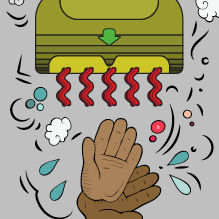
It’s no secret that hand dryers installed in public bathrooms can seem rather loud, but we were blown away by a young scientist’s findings when she put the volume levels of 44 automated machines to the test in restrooms across Alberta, Canada. Turns out some of those volumes can do a number on kids’ ears — which are more susceptible to noise-induced hearing problems — by reaching sound levels well beyond the danger zone of 85 decibels. Several of the various brands measured above 100 decibels when in actual use for hand-drying, and one was even greater than 120. The study, by then-9-year-old Nora Keegan, has captured international attention, with coverage by the New York Times, CNN, Canada’s CBC, and other media outlets. Now 13, Keegan is likely one of the youngest researchers to have her work published in the journal Pediatrics & Child Health. Per an NPR story, the Calgary student was inspired by the ringing in her ears and other kids’ reactions to hand-dryer noise to get to the bottom of just how loud the dryers — a common presence in public washrooms around the world — can be and whether they might negatively impact hearing ability. Her research, published this past summer after an approximately 15-month investigation, interestingly noted that some of the automated machines’ higher readings surpassed the legal limit of 100 decibels for peak loudness of children’s toys in Canada. A few other notable findings from this timely research:

  • “Not all hand dryers are equal in their hearing safety.”
  • Various dryers are potentially louder than some manufacturers’ claims.
  • Dryer noise is “much louder at children’s heights than at adult height.”

According to Keegan, the study’s “results can be used to guide regulators, builders, and landlords in making decisions about which dryers to install in public facilities.” The investigation also highlights “the importance of measuring dryer loudness at the location of children’s ears” — versus that of adults, who are typically taller.


What’s the big deal?

Noise exposure, one of the most preventable risk factors, is a leading cause of hearing impairment — second only to aging. Over a billion children and adults are vulnerable to recreational noise-related hearing impairment alone, per the World Health Organization, making it essential to keep the volume down. One of the most effective actions you can take is to prevent or limit your child’s exposure to excessively loud noise. Keeping hearing protection on hand — including custom earplugs, headphones, or earmuffs to help temper loud sounds, can also go a long way toward preserving your child’s hearing.      

Hearing Aids: 5 Fun Facts on What These Powerful Devices Can Do

Hearing Aids: Get the Scoop on What These Small but Powerful Devices Can Do

Did you know? Fewer than one out of three adults 70 and older who could benefit from hearing aids actually uses them, per the U.S. National Institute on Deafness and Other Communication Disorders, and the rate plunges to just 16 percent among those 20 to 69.

The reasons for these stark statistics may vary, but what’s clear is that disabling hearing loss — a serious public health issue affecting approximately 466 million people worldwide — is undertreated on a global scale.

Some individuals who need hearing help might not realize how far technology has advanced to make communication easier and more empowering than ever, even in some of the most challenging listening situations.

Check out these five fun facts you may not have known about hearing devices:

  1. Like Elephants, They “Remember”

    Want the same great listening experience at your favorite — but noisy — food spot every time you get together with family and friends? Options vary across different product lines, but some AGX® Hearing devices offer a “restaurant” setting that cuts background noise, or you can create your own geotagged “memory” with sound settings tailored to specific locations for a consistent experience.

  2. Built-In Mics Put You in Control

    When a room or other venue contains competing sounds, you need a way to focus on the audio you actually want to hear. You can use your AGX hearing aid’s directionality function to focus the device’s microphones on the conversation in front of you, for example, versus the noise or other sounds behind you.

  3. They Play Well With Other Devices

    Hearing impairment can make it difficult to track who’s saying what in group discussions — for instance, a brainstorming session at work. A wireless Bluetooth® microphone, set in a central spot during the conversation, can send speech directly to your hearing aid! During more personal gatherings, your conversation companions can take turns placing the mic on their lapel while speaking.

  4. You Can Stream Like a Champ

    Speaking of playing well with other devices: Many hearing aids today let you transmit audio from your television, stereo, or smartphone to your hearing tech — whether streaming directly or with the help of a wireless accessory called a “streamer” that clips to your collar. Laugh along with your favorite TV comedy series, enjoy the latest tunes, or video chat on your smartphone with clarity and confidence.

  5. They Make Good Fitness Buddies

    Some cutting-edge hearing aids not only offer great sound, speech clarity in noise, and audio streaming from your smartphone but also track brain and body health using artificial intelligence. With the AGXs liv, for example, you control your programs, settings, and streaming while the Thrive™ Hearing app records your health data and provides three wellness scores, helping you track your fitness goals.


Want a closer look at what today’s modern technology can do for your hearing health and enjoyment? Contact us to schedule your FREE demonstration today! Our caring team can’t wait to show you how far hearing aids have come.

How Prevalent Really is Hearing Loss Among Americans and Canadians?

How Prevalent Really is Hearing Loss Among Americans and Canadians?

How many people in your life have hearing difficulties? One person? Two people? A handful? No one? The actual number is quite possibly more than you think, because hearing loss — the inability or reduced ability to perceive sounds that enter the ear — is much more common than many realize.

In the United States and Canada together, for example, millions of people live with hearing loss. Numbers may vary per organization, government agency, or study, but:

In both countries, hearing loss also represents one of the top chronic physical conditions — even, in the case of the United States, ahead of diabetes or cancer. It’s a growing concern affecting children and adults, including approximately 34 million youth worldwide. In fact, it’s one of the most common birth defects in Canada and possibly the most common one in the U.S.

The good news?

Most hearing loss can be effectively managed with solutions such as hearing aids, helping you stay connected to the people, places, and experiences that matter most.

The bad news?

Only a fraction of those who could benefit from hearing help actually seek or receive it, making hearing loss an undertreated issue.

Even worse, hearing loss not only impacts communication but can go hand in hand with other problems such as social isolation, depression, diabetes, dementia, heart disease, and risk of falls.


FEBRUARY IS HEART MONTH

Did you know? Like hearing loss, cardiovascular disease — including heart disease and stroke — is a global public-health challenge. It’s the No. 1 killer worldwide, with nearly 18 million deaths annually per World Health Organization estimates, and is linked to hearing loss.

Precisely how cardiovascular disease and hearing loss are connected isn’t yet conclusive in all cases, but researchers have found, for example, that those with heart disease are 54 percent more likely to experience a hearing loss — even more so if they’ve suffered a heart attack.

Some risk factors such as age, gender, and family history can’t be helped, but healthy choices such as the following can make a difference in helping prevent either condition:

  • Avoiding tobacco
  • Following a healthy diet
  • Exercising regularly
  • Getting regular hearing and overall checkups

Take it to heart, and spread the word!

Does Your Heart Health Affect Your Hearing Health?

Easy Ways to Boost Heart Health

The human body is complex. So complex, in fact, that some things you read about it might seem downright far-fetched. For example, your heart health affects your hearing health.

The Heart–Hearing Link

That might sound a little squirrelly, but it’s supported by more than six decades of research. How are they connected?

Your inner ear is where sound waves get translated into a language — electrical impulses — that your brain understands. Structures critical to this translation process depend on nourishment from tiny blood vessels. When your heart doesn’t work well, those structures don’t get enough blood and, therefore, don’t work like they should, leading to hearing loss.

The connection is so strong that, in the event of a heart attack, it’s recommended that you get a hearing test to catch hearing loss early. It’s also been suggested that every hearing care patient’s history include detailed information about heart health, such as history of heart disease, hypertension, heart attacks, or heart surgery due to coronary blockage.


Keep Your Heart Healthy

There are plenty of easy ways to improve your heart health. Instead of a list of don’ts, we’ll keep it positive. Here are three easy things you can do to head toward heart health.

  1. Stand up

    The scientific community is starting to recognize just how unhealthy sitting for a big portion of the day really is. Simply put, sitting for long periods is linked to heart disease. Stand up from time to time. It helps more than you realize. It’s not a matter of making sure you’re exercising enough — per Dr. Erin Michos, associate director of preventive cardiology at Johns Hopkins, “Even if you’re doing 30 minutes per day of physical activity, it matters what you do the other 23 hours of the day.” Dr. Michos finds reasons to get up and move every hour, such as going down the hall to a colleague’s office to ask a question instead of asking via email.

  2. Make every meal a rainbow

    To reduce risk of heart disease, the Heart and Stroke Foundation of Canada recommends 7 to 10 servings of vegetables and fruit every day. Practically all of them are low in calories, fat, and sodium, and many are rich in vitamin C or beta-carotene, both of which reduce plaque buildup in your arteries. To understand what the foundation means by “serving,” here’s Health Canada’s current serving-size guide.

  3. Keep the fats — but only the healthy kind

    It’s never a good idea to cut out all fat. Your body needs certain fats. According to the American Heart Association, the heart-healthy approach is to focus on unsaturated fats (poly or mono), heavily limit saturated fats, and cut out artificial trans fats, hydrogenated oils, and tropical oils entirely.

    What does that mean, exactly? Easy ways to load up on the good stuff are adding fish and avocado to your diet, eating nuts in moderation, and steering toward oils that are low in saturated fat, such as avocado, grapeseed, olive, and sesame oils.


A Feast for the Ears: Supporting Your Hearing Health Through Food

March is National Nutrition Month, and that makes this an especially great time to talk about hearing wellness and nutrition. Never thought about food in relation to your ears? You’re not alone. But considering food is a critical source of elements crucial to healthy skin, muscles, organs, and more, it’s no wonder that nutrition and hearing are connected.

Take children and hearing loss, for instance. Did you know that a lack of adequate nutrition early in life could mean problems with hearing later on? A study published in the American Journal of Clinical Nutrition in February 2018, for example, found that young adults who experienced poor nutrition in their preschool years had double the risk of hearing loss versus their better-nourished counterparts.

Though the research focused on a population with ongoing malnutrition issues and limited health care access, the study adds to the body of research linking nourishment — broccoli, anyone? — and hearing health.

Speaking of broccoli: Selected vitamins and minerals in your food can contribute to protecting your hearing wellness, according to HealthyHearing.com, so feast your eyes — and ears — on these examples to jump-start your healthy-hearing nutrition:

Clams, Cod, and Rockfish

These delights from the sea not only please a discerning palate but can provide potassium, an important mineral for regulating blood and tissue fluid levels — including in the inner ear, which plays an important role in hearing and balance.

Okra, Asparagus, and Spinach

Choices abound when it comes to sources of folate, which studies have linked to healthy outcomes such as decreased risk of hearing impairment among older men. Whether you’re into dark green veggies, broccoli, avocado, escarole, or edamame, you can find folate-rich foods to match your tastes.

Leafy Greens, Whole Grains, and — Hey — Dark Chocolate!

Yep, dark chocolate’s on our list of foods containing magnesium, which — combined with vitamins A, C, and E — can help thwart noise-induced hearing loss. Other magnesium sources include pumpkin seeds, kidney beans, chicken breast, and more.

Lentils, Split Peas, and Navy Beans

Serve them mashed, whole, in a soup, or in a salad bowl — whatever your delight! Lentils — along with other legumes and foods such as beef, oysters, and dark-meat chicken — offer zinc, which supports the immune system and may help fight tinnitus or ringing in the ears.

Healthy eating is important year-round, so keep these helpful tips in mind for National Nutrition Month and beyond. Want to learn more about hearing wellness and nutrition? Contact us! We’re happy to answer your questions.