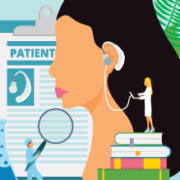
Early Hearing Testing: 6 Reasons It Matters
There’s an old saying that “Knowing is half the battle,” and that adage couldn’t be truer when it comes to your hearing and quality of life. Hearing loss affects more than your ability to communicate, so we’re sharing six reasons to have your hearing tested sooner rather than later.
- FALLS — Untreated hearing impairment is linked to falling, which is more common among people with hearing loss. In a 2012-published study of 2,017 adults ages 40 to 69 and led by Johns Hopkins and National Institute on Aging researchers, those with mild hearing loss were nearly three times as likely to have reported a fall. Ears play an important role in helping maintain balance, making it important to identify and address hearing problems early.
- BRAIN HEALTH — Hearing loss can potentially take a toll on the brain, which may have to work harder to process sound. In addition, an ever-growing body of research connects hearing loss to other problems such as faster brain atrophy, earlier onset of major cognitive decline, and up to five times’ higher risk of dementia. With hearing aid use, however, age-related cognitive decline could slow as much as 75%.
- DEPRESSION — Research supports a link between hearing loss and depression. Older adults with hearing loss, for example, have a 57% greater risk of experiencing deep depression than those without it, per a Johns Hopkins investigation. With hearing aid use, however, the odds of depression may be lower, according to another study.
- FINANCES — Did you know? Research suggests a link between untreated hearing loss and higher medical costs, with older adults paying some 46% more — about $22,434 — than their normal-hearing peers in a 10-year span. In addition, annual household earnings can take a hit of as much as $30,000 with a hearing loss, but treatment with hearing aids could reduce that risk by up to 100%.
- CHILD DEVELOPMENT — The impact of hearing loss on children reaches beyond the physical and emotional effects, with implications for their academic-, social-, and communication-related development. For example, 25% to 35% of kids with hearing loss in even just one ear may risk failing a grade level. Early intervention, which could make a big difference in a child’s quality of life, starts with testing.
- RELATIONSHIPS — Adults with unaddressed hearing loss report reduced social engagement, more emotional turmoil, and other challenges that could affect their relationships and more. The good news? Not only do adults treated with hearing aids report significant improvements in their social lives and relationships with families, but their loved ones do too, per research from the National Council on Aging.
Some 466 million children and adults around the globe have experienced disabling hearing loss, according to the World Health Organization, but only a fraction receive care. Empowerment starts with answers, so don’t wait. Stay atop your hearing health by scheduling a comprehensive hearing evaluation with our caring team today. It’s easy, painless, and helps you stay on the path of better hearing and improved overall wellness.




 But with comprehensive hearing care at the hands of an empathetic provider who truly understood the isolation and social difficulties sensory deprivation can cause, Micah’s condition became manageable.
“I know a world of sound because of an audiologist and her team who were devoted to me for over 20 years — the team that fit me, gave me batteries, reminded me of appointments, cleaned my hearing aids, sent them off for repairs, and knew me as an individual. They have given me courage, confidence, and success. I owe them more than the world.”
But with comprehensive hearing care at the hands of an empathetic provider who truly understood the isolation and social difficulties sensory deprivation can cause, Micah’s condition became manageable.
“I know a world of sound because of an audiologist and her team who were devoted to me for over 20 years — the team that fit me, gave me batteries, reminded me of appointments, cleaned my hearing aids, sent them off for repairs, and knew me as an individual. They have given me courage, confidence, and success. I owe them more than the world.”
 “Quite honestly, it took me 20 years to stand up straight to my condition, look it in the eyes, and call it my own. It is my hope that this story will […] act as a reminder of the cause hearing health care strives for.”

 Proudly Canadian and Independently Owned and Operated